
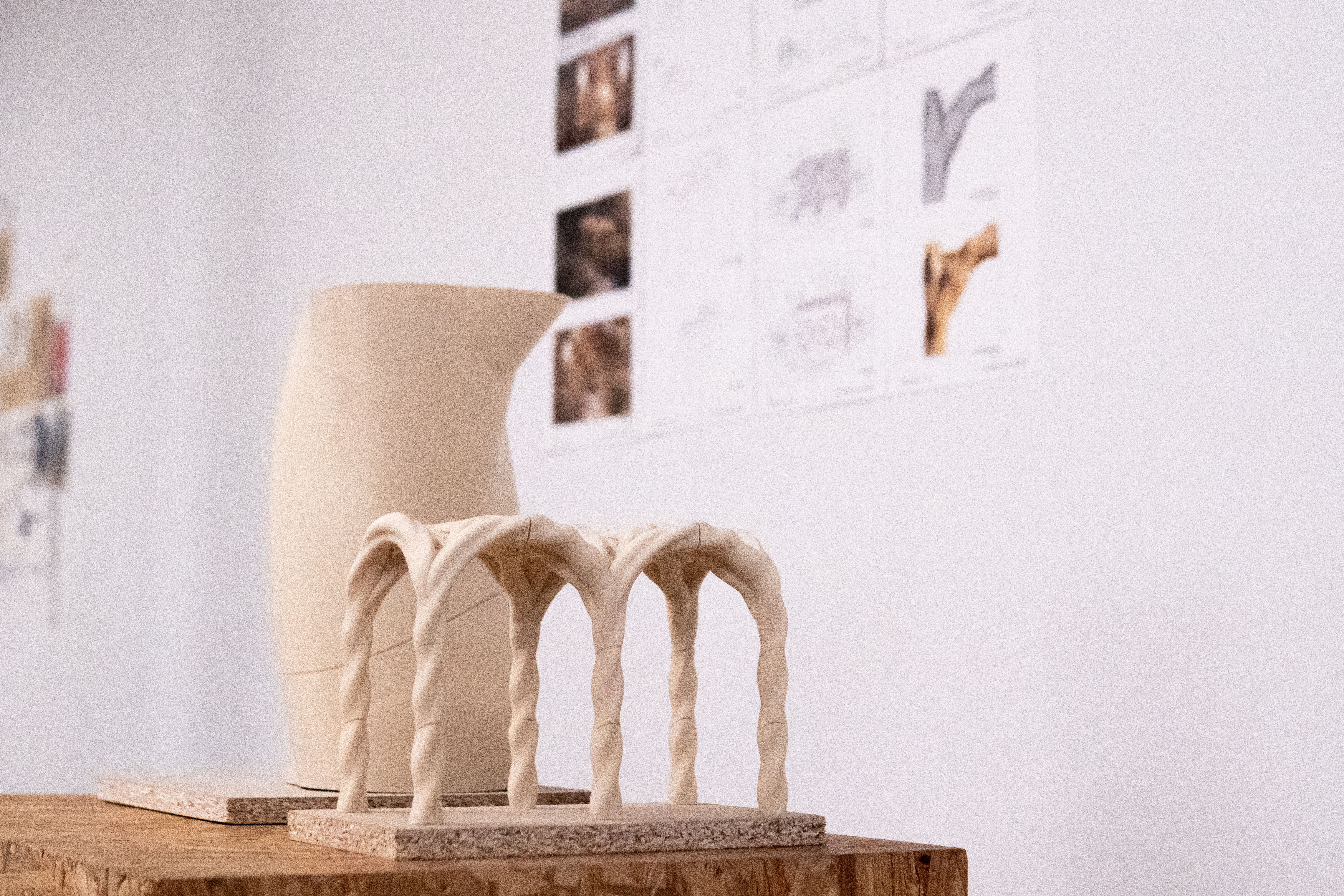
Sacred Spaces, Designed Parametrically
In the master’s elective Digital Sakral at the MSA Münster School of Architecture, students explored how sacred spaces can be designed and reinterpreted with digital tools. Starting from historical and contemporary examples, they developed their own concepts – supported by parametric modelling and computational design processes.
Digital tools were not an end in themselves, but a means of creating spatial effect: atmospheric, structural and typological. The course led from the first idea to physical models produced with digital fabrication systems such as 3D printing.
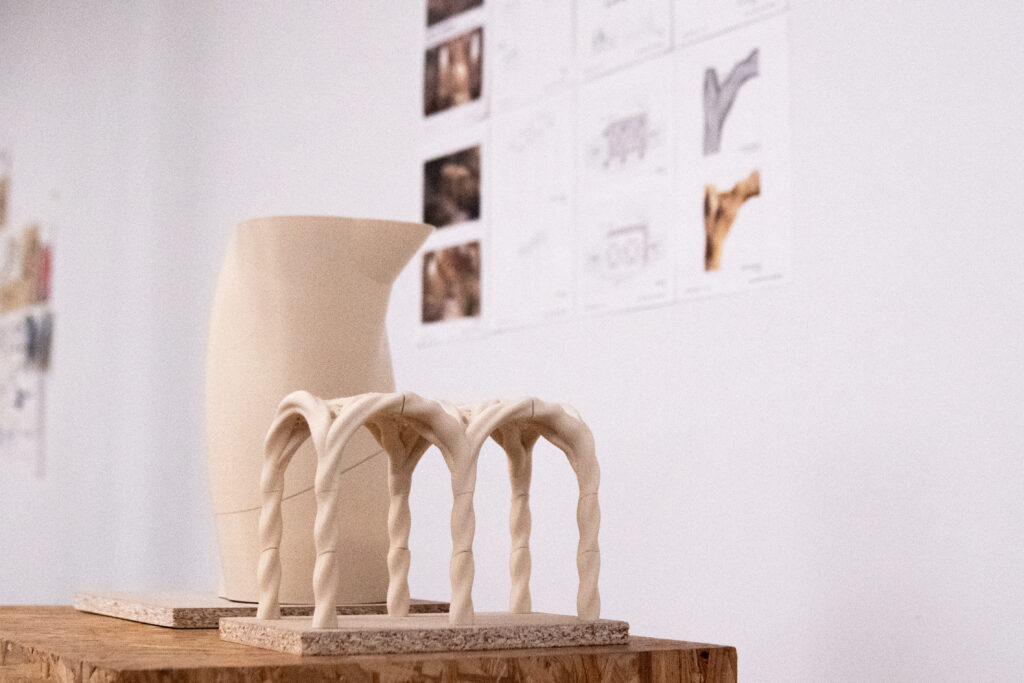
About the Course
- Elective module ma.wm.1, Master’s programme, winter semester 2025/26
- Lecturer: Moritz Wesseler M.A.
- Tools: Rhino, Grasshopper and the digital fabrication systems of the robotics.lab of FH Münster
Projects from the Final Presentation
In December 2025, the teams presented their designs – from pavilions in the Venner Moor to a memorial in a former prison chapel.
digi.imprint · Lichtpfad · captivi · Moormentum · Nestframe · FLOA · Sakraler Bogen · Under the Light · Aeolian Harp
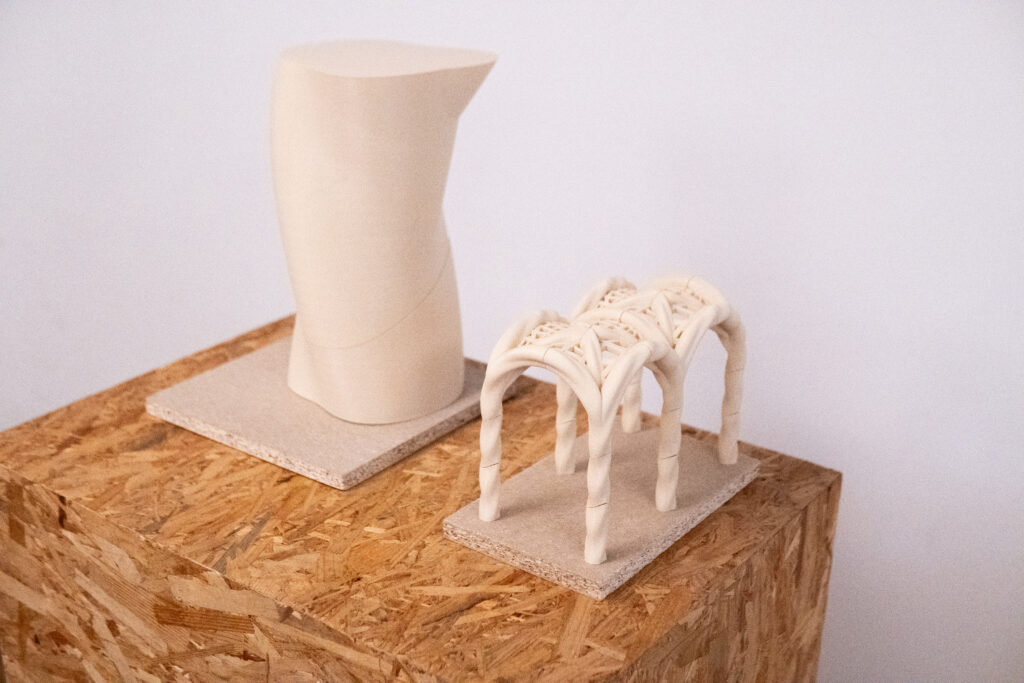
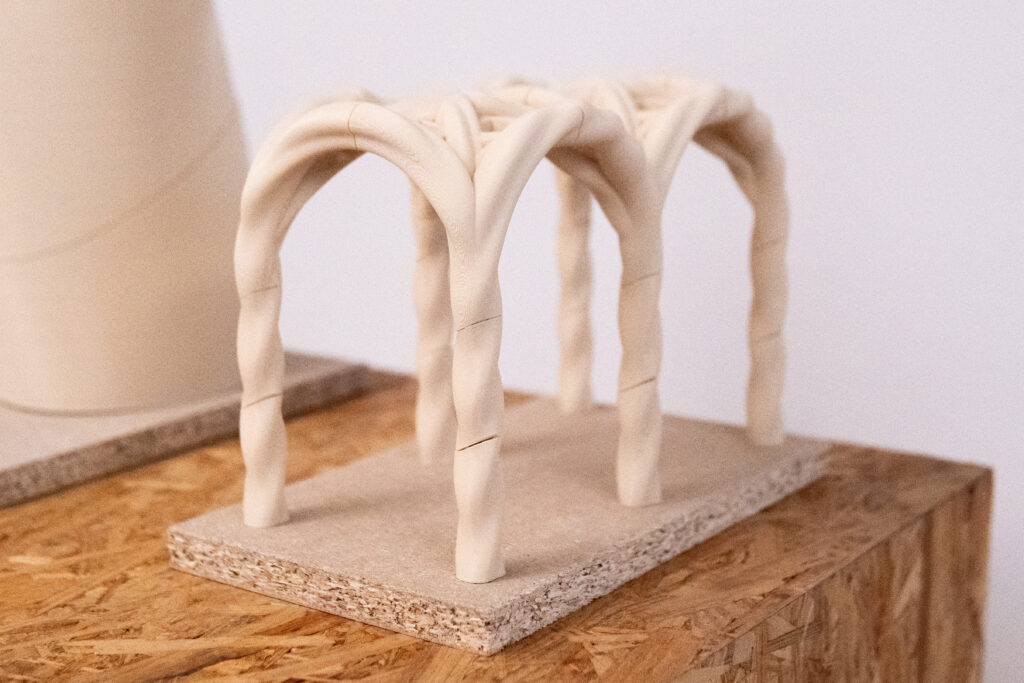
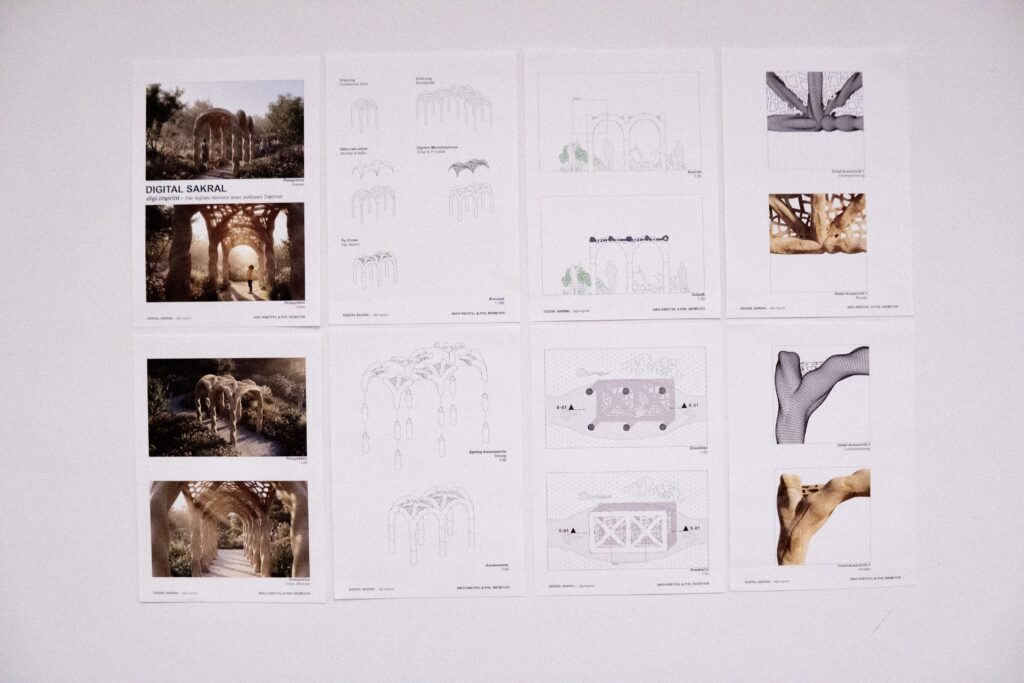
digi.imprint – Niko Kneffel & Phil Niemeyer
“The digital imprint of a timeless tradition”: starting from an archaic core, the design moves through modularity and the separation of structure and envelope to a porous, sine-based vault – a modern take on the sacred colonnade.
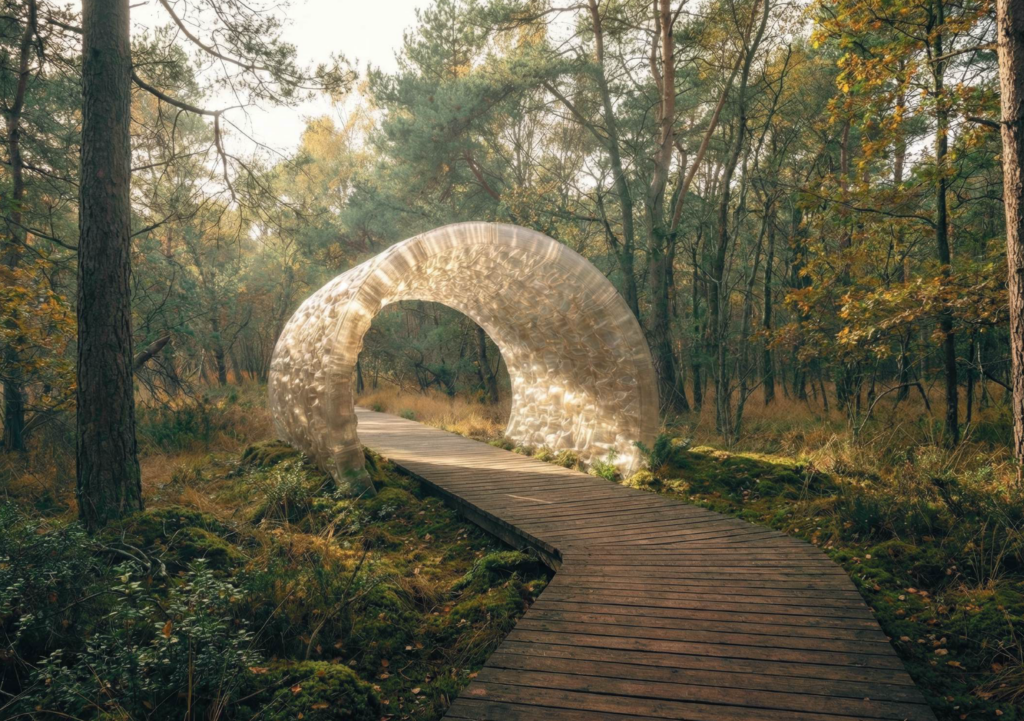
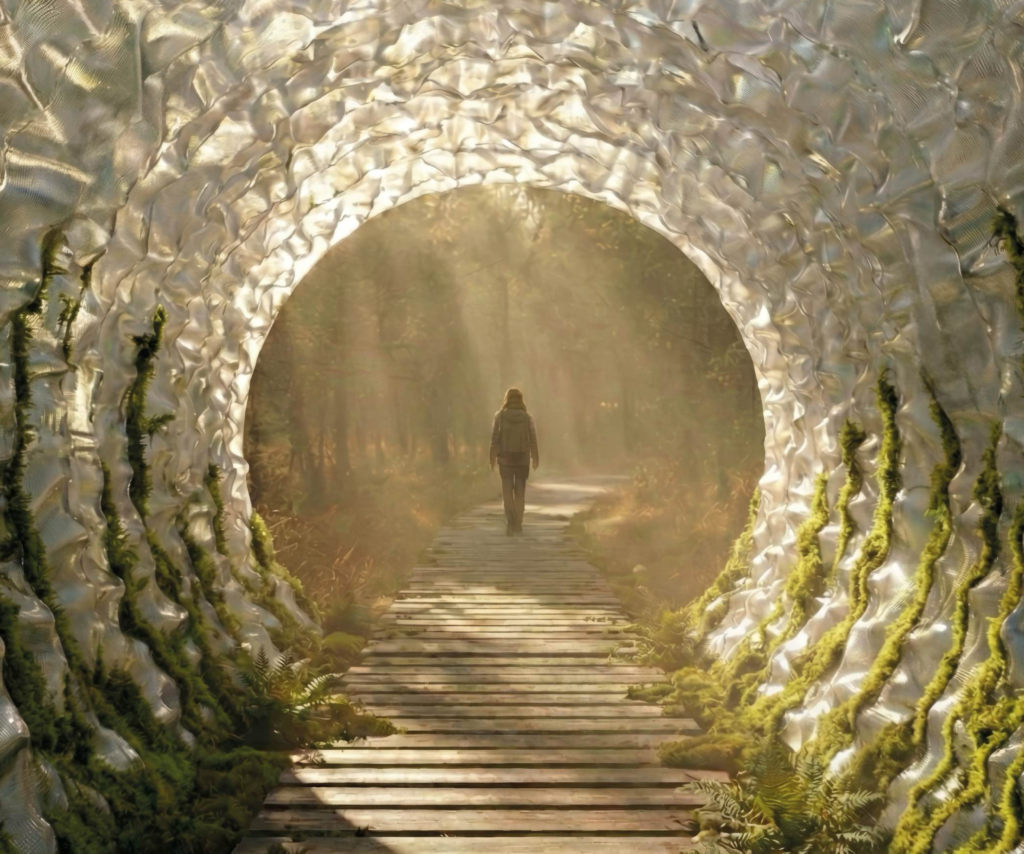
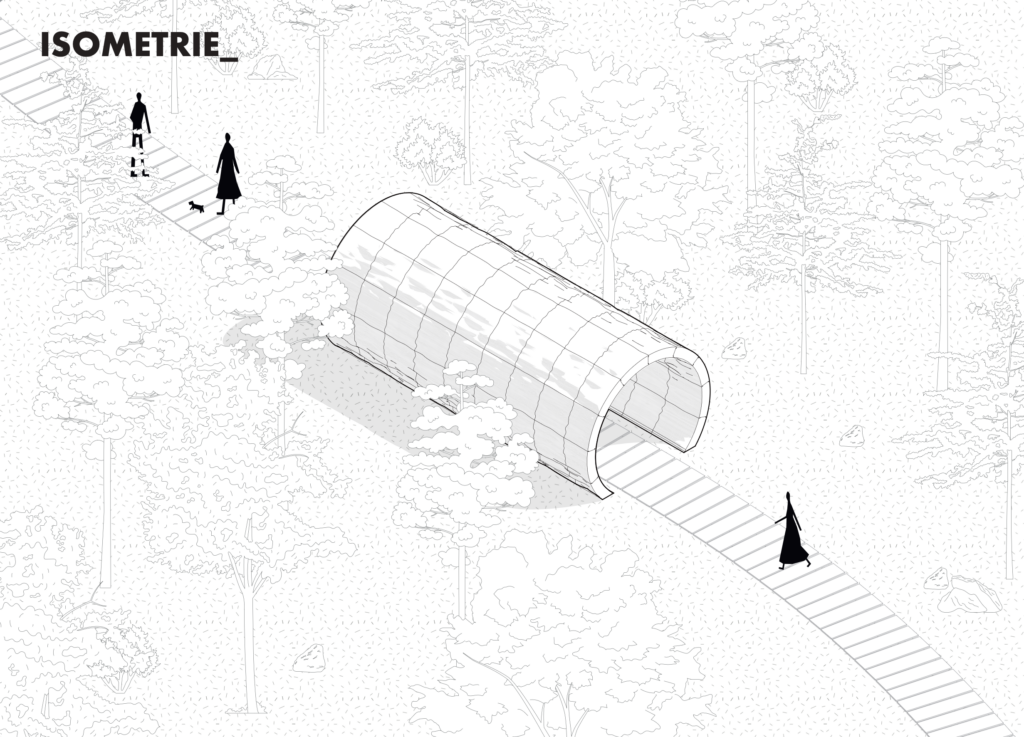
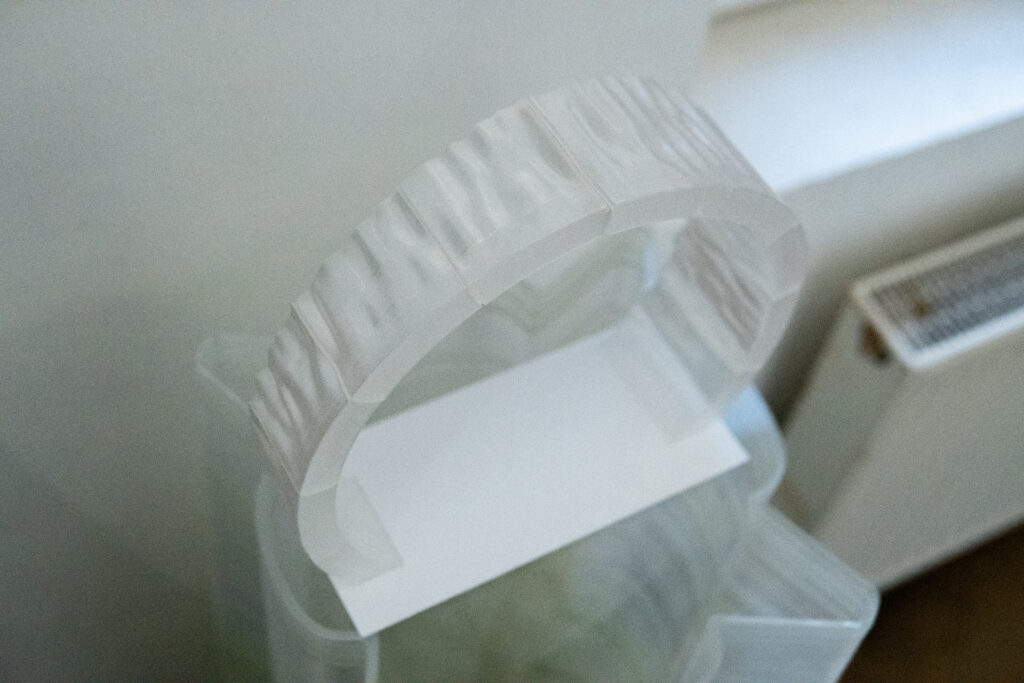
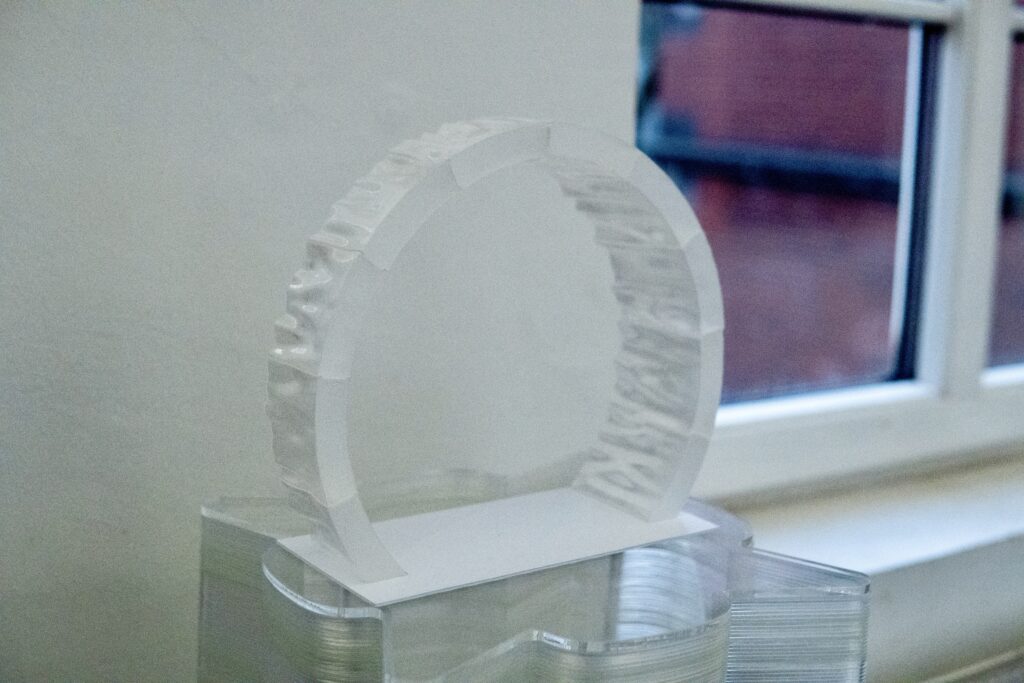
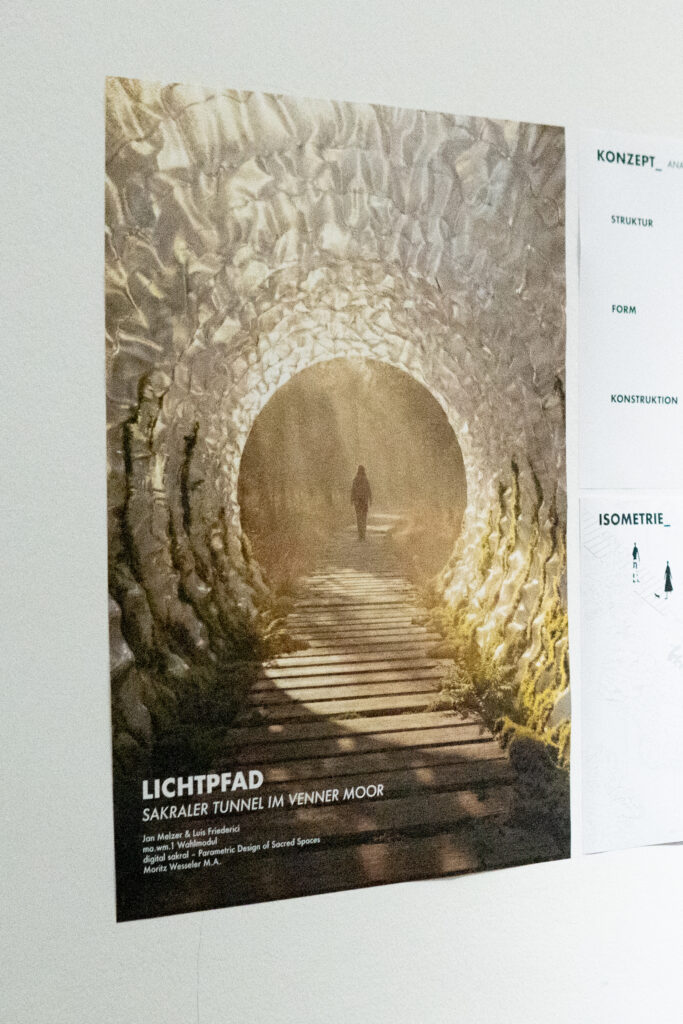
Lichtpfad – Jan Melzer & Luis Friederici
A sacred light path as a tunnel in the Venner Moor. The surface follows the analogy of tree bark; the segments are cast in CNC-milled moulds and stacked into an arch.
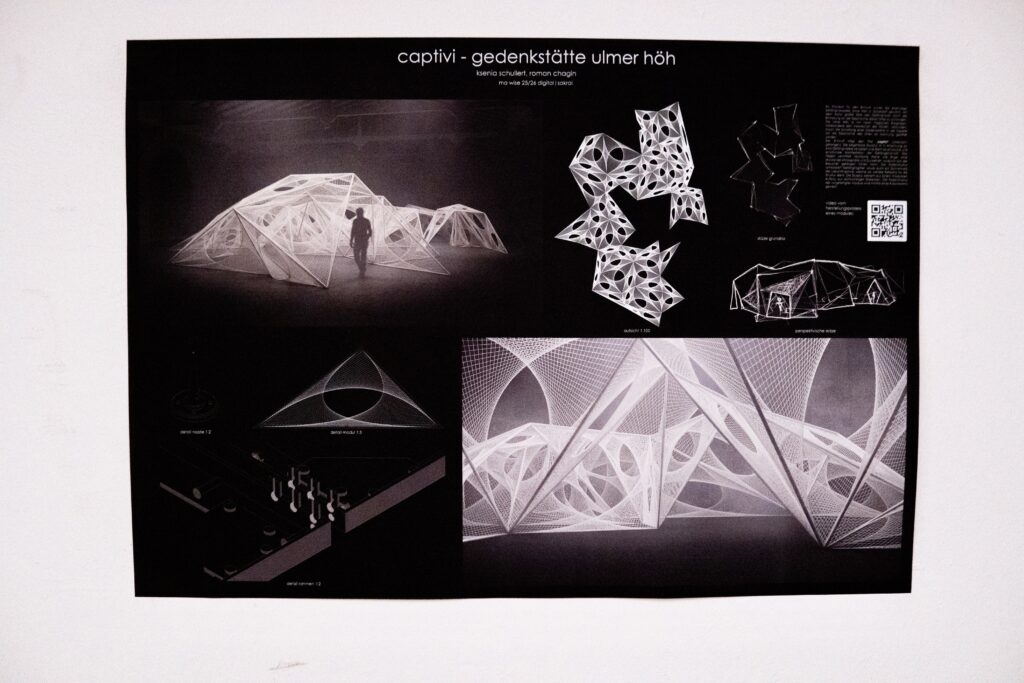
captivi – Ksenia Schullert & Roman Chagin
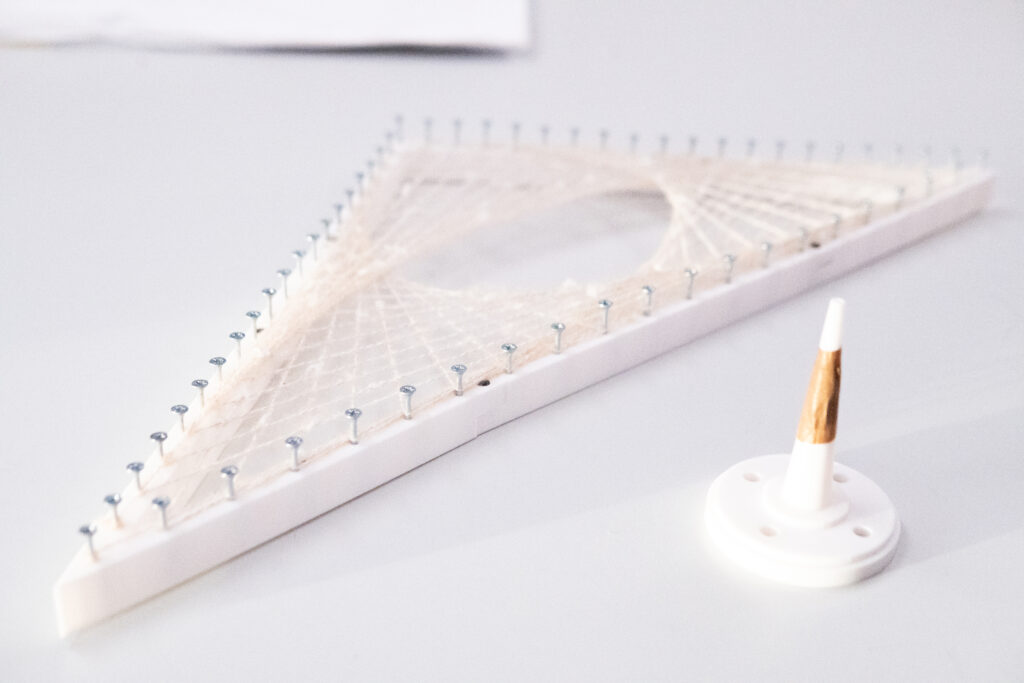
A memorial in the former prison chapel Ulmer Höh in Düsseldorf. The walk-in sculpture is based on a prison cell and makes confinement physically tangible. Its triangular modules carry a thread structure that is woven by a robot arm.
Moormentum – Marlen Krämer & Laura Santoro
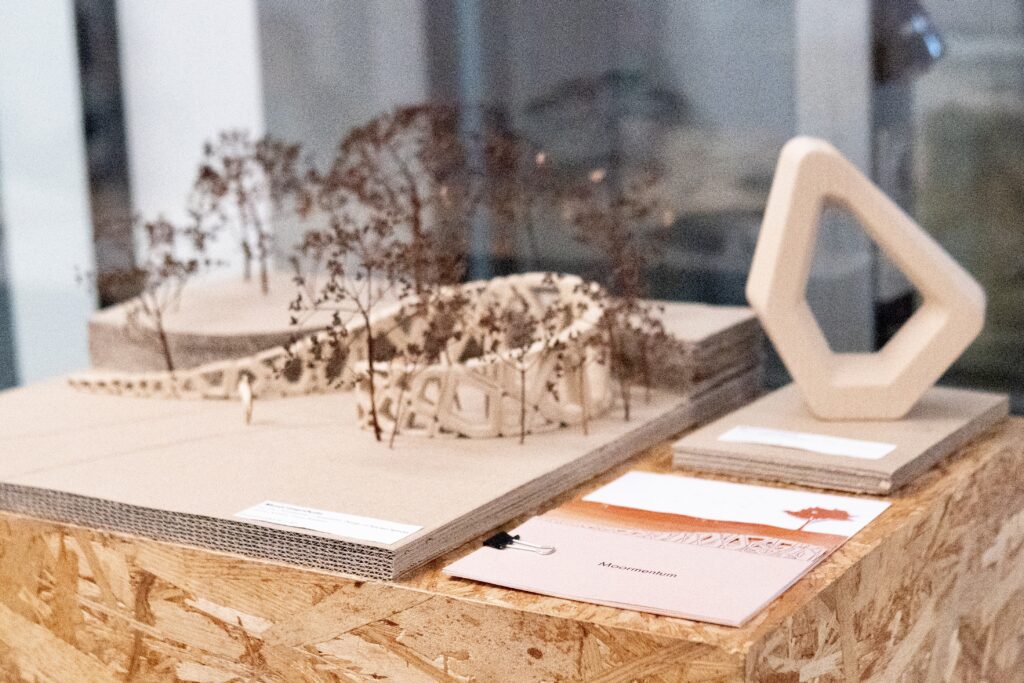
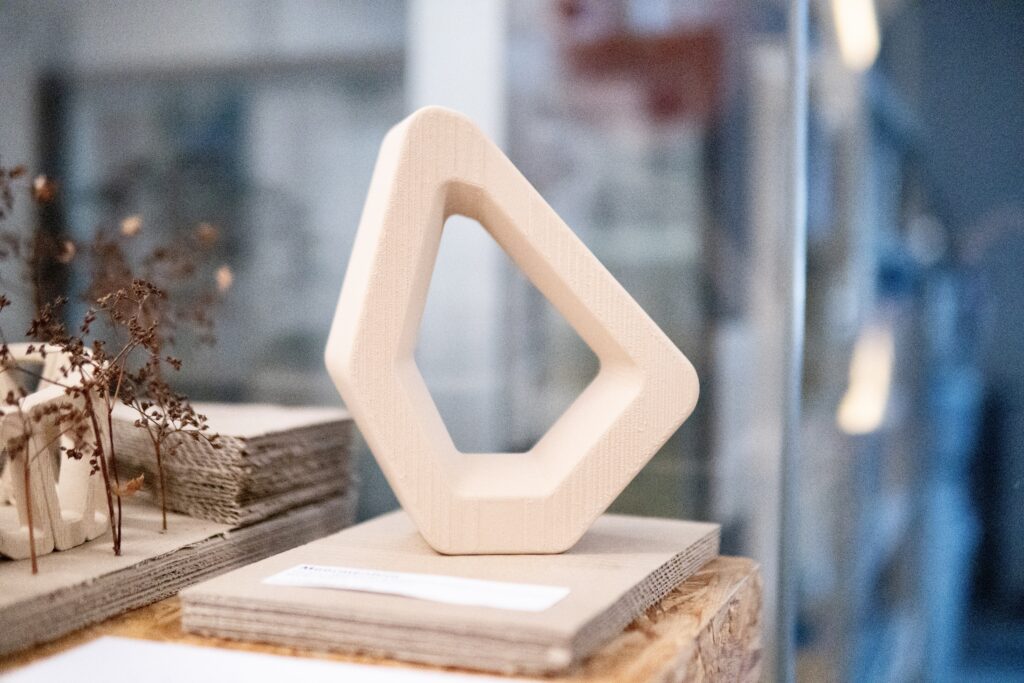
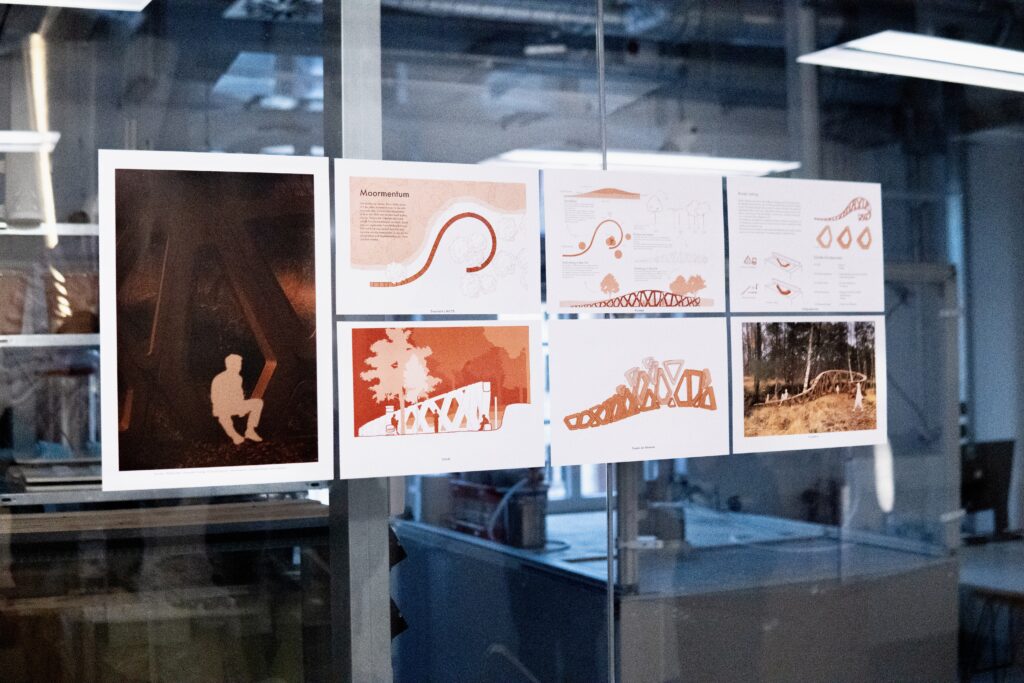
A 32-metre pavilion embedded in the peat layers of the Venner Moor – a place of quiet communication that rises in a gentle wave to 3.6 metres. The ceramic elements are designed for binder-jetting 3D printing and stacked on site.
Nestframe – Vincent Höltmann & Simeon Erling
Not every sacred object is made for people. Nestframe is a shelter for the common snipe, a bird that nests on the ground in the moor: the openings are large enough for the bird and too small for predators.
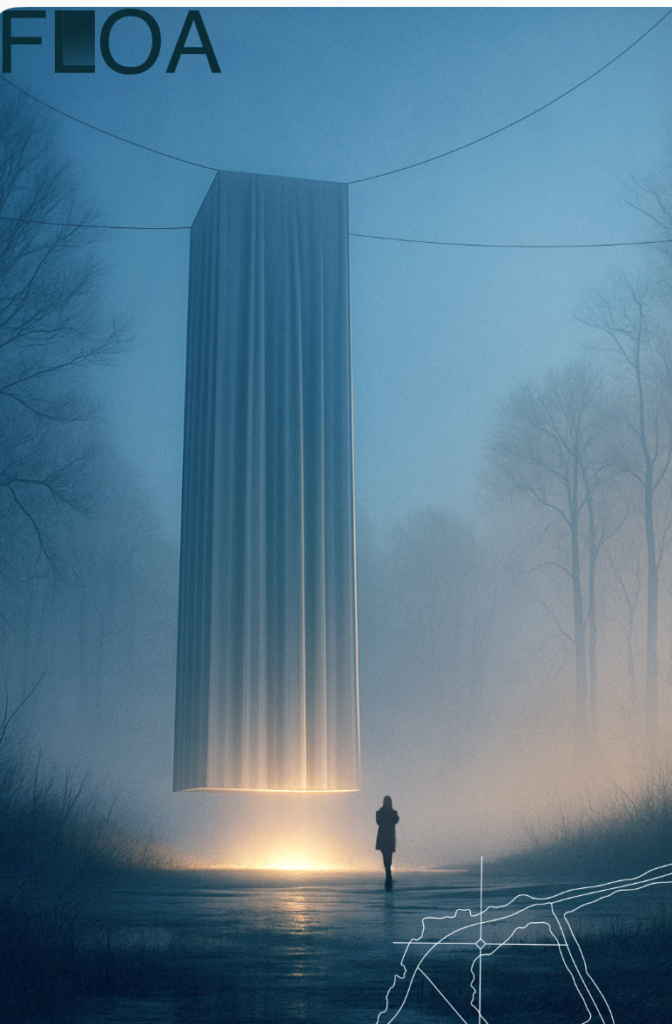
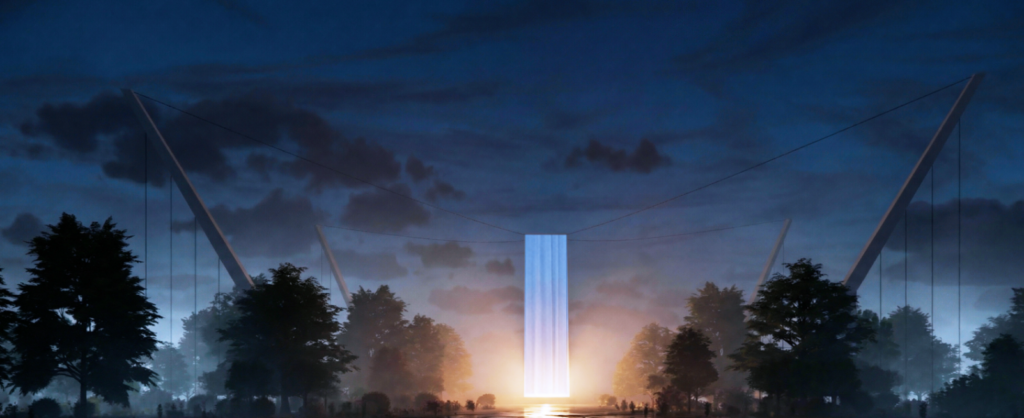
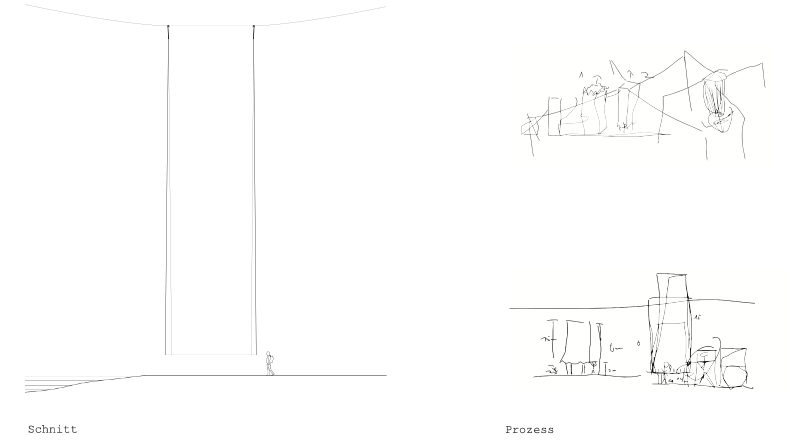
FLOA – Manuel Diek & Fabian Øverjordet
A bright body of fabric, stretched between four points and floating just above the moor. Light gathers beneath it – a moment of stillness between arriving and moving on.
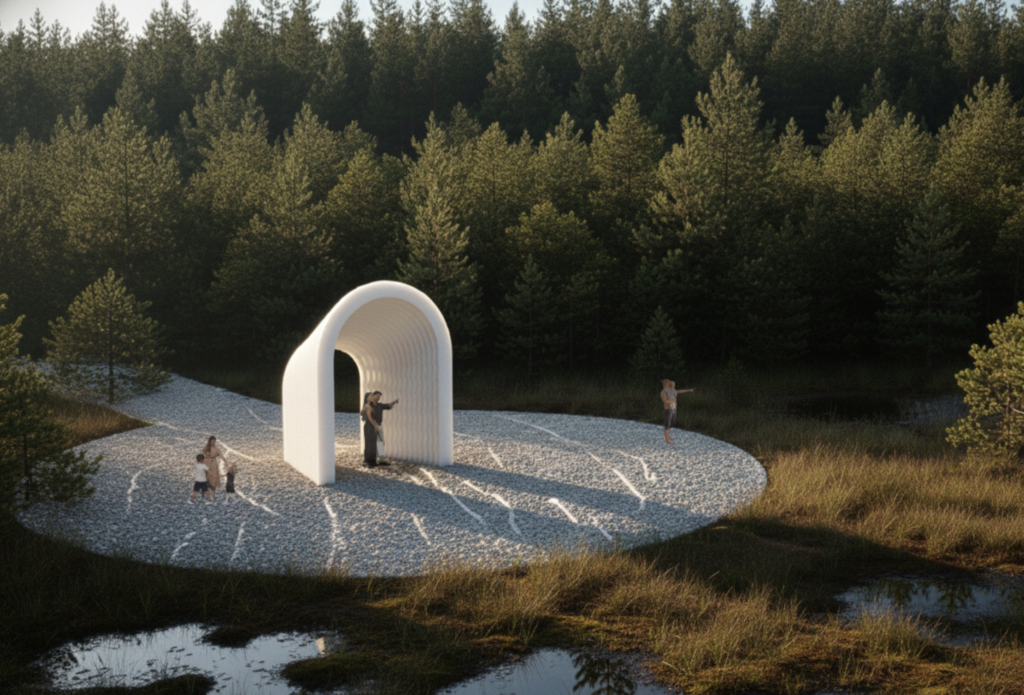
Sakraler Bogen – Luca Minnebusch & Tim Hoebink
A freestanding sacred arch in the Venner Moor that frames the landscape and invites visitors to pause.
Under the Light
A canopy for the Egyptian desert: its wave-shaped, perforated roof is inspired by a curtain moving in the wind and by mashrabiya screens. The modular parts – canopy, central column and bench – are designed for additive manufacturing and connected by a plug system.
Aeolian Harp – Christian Brunnert & Fabio Koczula
A wind instrument printed from recycled PETG with the KUKA KR120 and Weber DXR25 extruder: a resonance body, a narrow neck and a sound funnel shape the air column, while nylon strings are set in motion by the wind.
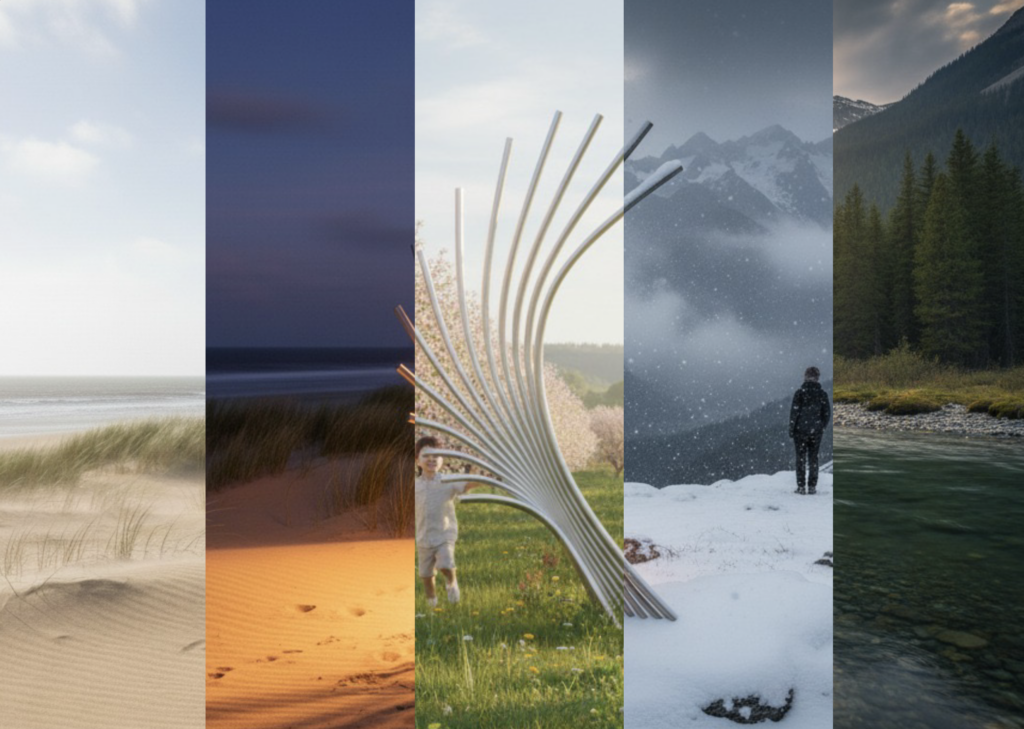
Further Impressions
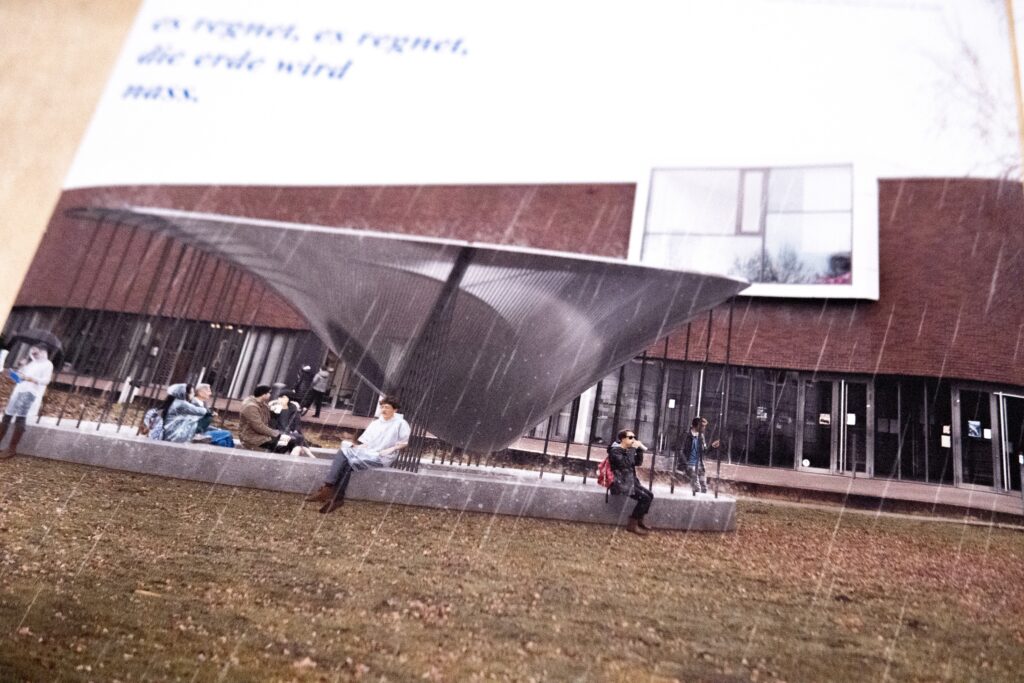
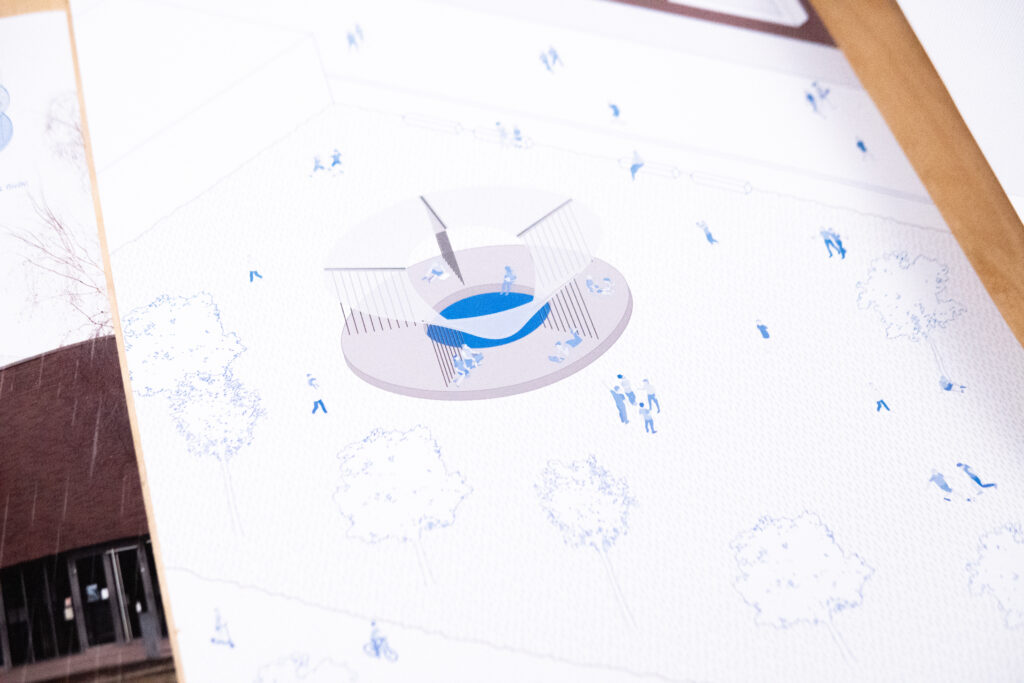
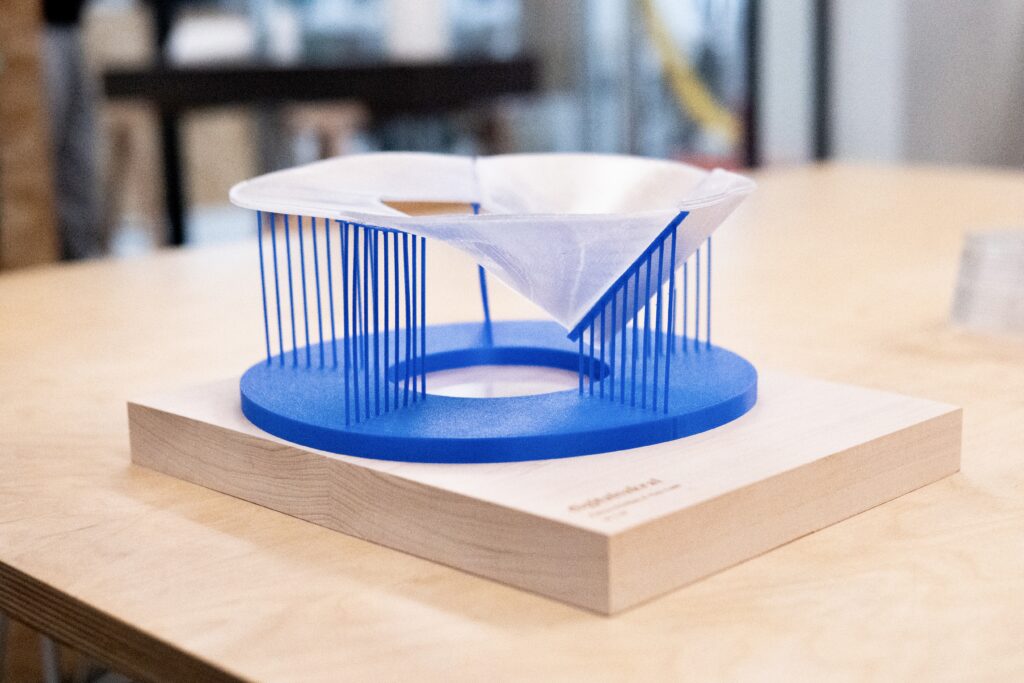
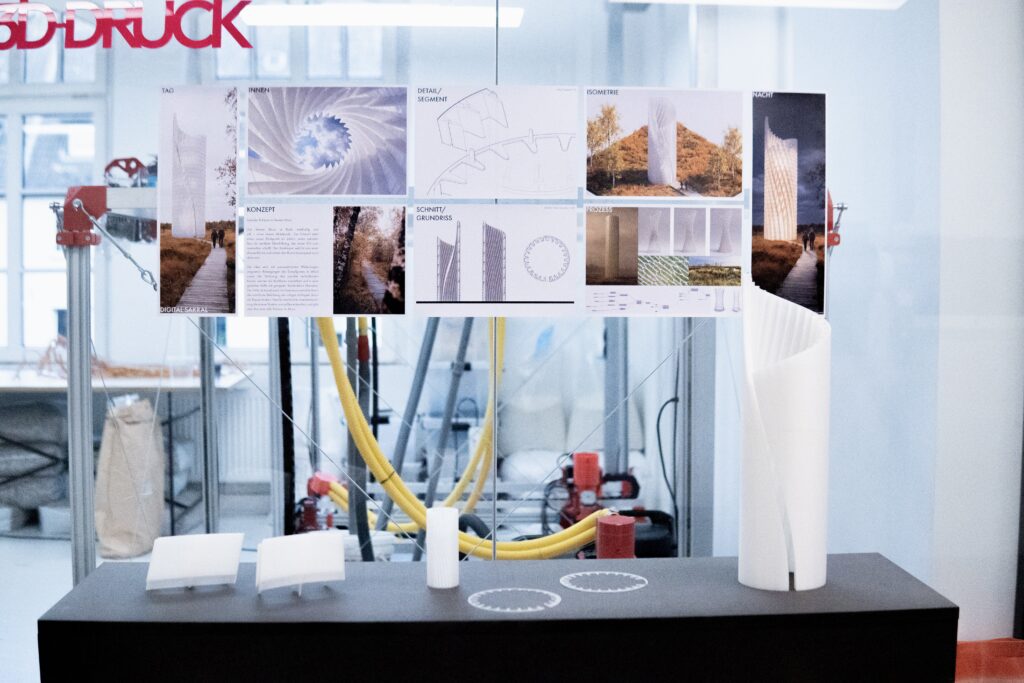
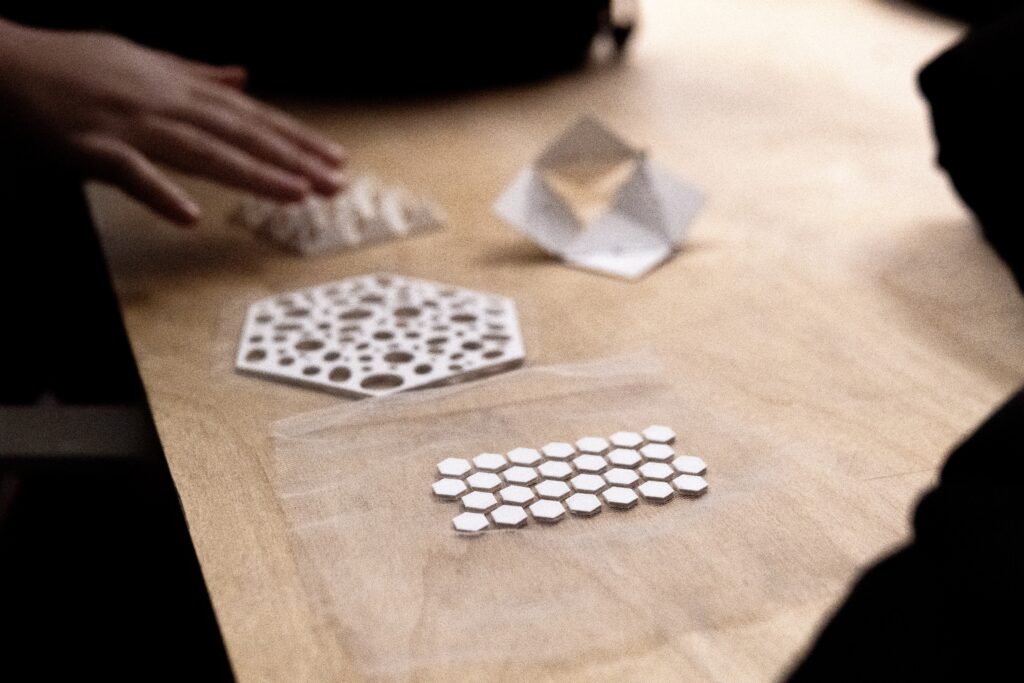
All projects were designed and built by the students of the course. Our thanks go to all participants for their commitment and the strong final presentation.
Parametric Design in Teaching and Practice
The methods used in the course – parametric modelling, rule-based geometry and direct data transfer to the machine – are the same ones we use in projects for shopfitting, interior fit-out and manufacturing.